

+86 0563-4308958
+86 15256308270
sales@qasimcn.com
Choosing the Right Grinding Ball Material for Maximum Performance
Optimizing Grinding Efficiency and Durability Across Industrial Applications
In heavy industries like mining, cement, metallurgy, and power generation, grinding is a critical operation. Central to this process are grinding balls, which serve as the grinding media inside ball mills and similar equipment. However, not all grinding balls are created equal. The material composition of a grinding ball directly affects its wear resistance, impact toughness, energy efficiency, and overall performance in specific operating environments.
Choosing the right grinding ball material is essential for maximizing mill efficiency, minimizing operational downtime, and reducing long-term costs. This article explores different grinding ball materials, their properties, industrial applications, and how to select the most suitable option for optimal performance.
Grinding balls operate under extreme conditions—constant impact, friction, high temperatures, and sometimes corrosive environments. Material selection influences:
Wear rate
Breakage resistance
Service life
Grinding efficiency
Maintenance intervals
The wrong material can lead to frequent ball consumption, inconsistent grinding, and excessive energy use, whereas a well-chosen material improves output and reduces operating expenses.
Composition: High carbon steel (e.g., 45#, 60Mn, 65Mn)
Properties:
Excellent impact toughness
Moderate hardness (50–60 HRC)
Good for wet or dry grinding
Applications:
SAG mills and primary grinding in mining
Raw material grinding in cement plants
Forged steel balls are ideal where high impact is expected, offering a good balance of hardness and toughness. They are reliable in coarse grinding and are cost-effective for high-volume operations.
Composition: Typically 10–30% chromium content with alloy elements
Properties:
High hardness (58–66 HRC)
Superior abrasion resistance
Lower toughness compared to forged balls
Applications:
Cement clinker grinding
Secondary and finish grinding
Dry or semi-dry environments
High-chromium cast balls excel in abrasive applications. They maintain their shape and size over long periods, minimizing replacement frequency and mill liner wear.
Composition: Approximately 5–10% chromium
Properties:
Balanced hardness and toughness
Moderate abrasion resistance
Economical alternative to high-chrome balls
Applications:
Cement finish mills
Iron ore processing
Thermal power plants
Suitable for environments where impact force is moderate, these balls offer a balance between wear resistance and cost efficiency.
Composition: 1–4% chromium
Properties:
Lower cost
Lower wear resistance
Shorter service life
Applications:
Non-critical grinding operations
Coarse or soft material processing
These balls are mainly used in operations with low abrasion and low productivity demands. They are less durable but economically appealing for certain sectors.
Composition: Varying alloy elements (e.g., molybdenum, nickel, boron)
Properties:
Tuned for specific performance profiles
Enhanced toughness or corrosion resistance
Versatile mechanical behavior
Applications:
Mining with acidic or alkaline slurries
Special alloys for high-temperature applications
Alloy steel balls are customized to match complex industrial conditions and are often used when standard materials underperform.
Composition: Alumina, zirconia, or silicon carbide
Properties:
Extremely high hardness
Chemically inert
Lightweight
Applications:
Fine grinding in pharmaceuticals, food, and electronics
Ultra-clean environments
Laboratory-scale ball mills
Ceramic balls are ideal where contamination must be avoided or where grinding needs to be ultra-fine. However, they are brittle and costly.
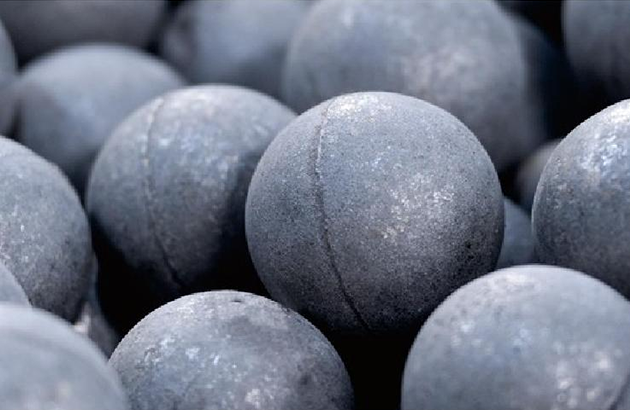
Selecting the correct grinding ball material requires evaluating several operational parameters:
The hardness, abrasiveness, and moisture content of the input material affect which grinding ball will last longer and grind more efficiently.
Hard ores → Need high-chrome or forged steel
Clinker → High-chrome balls are most efficient
Soft minerals or coal → Medium or low-chrome options may suffice
Each mill design has its own impact and abrasion profile:
Ball mills: Require durable, moderately tough balls
SAG mills: Need high-toughness forged balls
Vertical mills: Require lighter media (often ceramic or alloy)
Whether the mill operates wet or dry, at high or low temperature, or under corrosive conditions influences media choice.
Wet grinding → Requires corrosion-resistant materials
High temperatures → Need heat-treated or alloy solutions
Acidic slurries → Favor alloy steel or high-chrome options
Applications demanding ultra-fine powders (e.g., paint, ceramics) benefit from harder, smaller media like ceramic balls. For coarse grinding, large forged balls are more effective.
Correctly matched media improve energy transfer, reduce grinding time, and achieve desired fineness faster.
Durable balls reduce replacement cycles and ensure consistent mill operation.
Fewer replacements, reduced energy use, and less downtime lead to major cost savings over time.
Right media minimizes contamination and ensures uniform particle distribution.
High-quality balls protect internal mill components like liners and diaphragms.
Not true—excessive hardness can lead to brittleness and breakage. Applications with high impact require tough (not just hard) materials.
Grinding ball selection should be customized. What works in cement may underperform in mineral processing.
Lower-cost balls often wear faster, break more, and damage equipment, leading to higher total cost of ownership.
A blend of ball sizes improves grinding efficiency. Larger balls break coarse particles, smaller ones refine fines.
Track wear rate, media consumption, and particle size output to evaluate material performance.
Consult material engineers or grinding system specialists to choose or customize the best material.
Emerging technologies focus on:
Nano-structured alloys for better hardness-toughness balance
Eco-friendly composites with lower energy manufacturing requirements
Smart grinding balls with embedded sensors for wear tracking
Custom alloy design based on AI and simulation
These innovations will further refine material selection for maximum performance.
Selecting the right grinding ball material is a critical decision for any industrial process that relies on material reduction. Whether you're operating a cement finish mill, a mining SAG line, or a coal-fired power plant, the performance, efficiency, and cost of your operation are directly influenced by your grinding media.
Key takeaways:
Match grinding ball material to your application
Balance hardness, toughness, and wear resistance
Monitor performance and adjust media as needed
Invest in quality to reduce long-term costs and downtime
 Español
 Portugues
 Pусский
 Français
 中文
中文



 Phone
Phone
Comment
(0)