

+86 0563-4308958
+86 15256308270
sales@qasimcn.com
Why Chromium Alloy grinding balls Lead in Abrasive Resistance
Unveiling the Science and Advantages Behind High-Wear Performance in Industrial Mills
In high-load, high-speed grinding operations, wear resistance is not just a desirable property—it’s a necessity. Whether used in the comminution of ores in mining, the fine grinding of clinker in cement plants, or coal pulverization in thermal power stations, grinding balls endure relentless mechanical impact, friction, and corrosion. Under such demanding conditions, chromium alloy grinding balls have emerged as a top choice for their outstanding abrasive resistance, durability, and long-term cost efficiency.
This article explores the metallurgical reasons, real-world performance, and industrial advantages that make chromium alloy grinding balls leaders in wear resistance. From microstructural design to application insights, we’ll examine why these balls continue to dominate critical grinding environments worldwide.
Abrasive wear occurs when hard particles or rough surfaces slide across the surface of a material, gradually removing material by micro-cutting or micro-plowing. In ball mills and SAG mills, this is a constant reality. Grinding balls are repeatedly exposed to:
Impact from falling ore and media
Friction against internal liners and ground material
Chemical reactions in wet grinding environments
Over time, these forces degrade conventional grinding media—leading to material loss, decreased efficiency, and higher replacement costs.
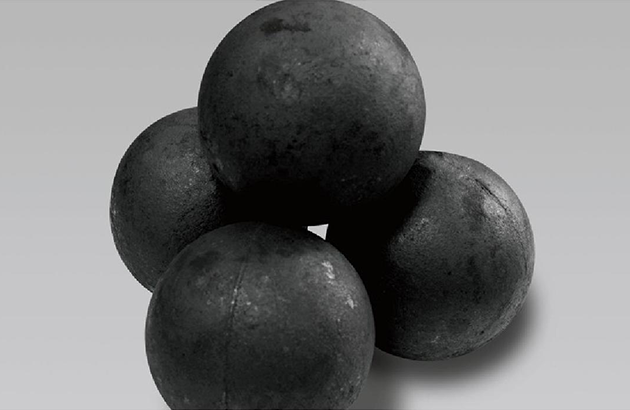
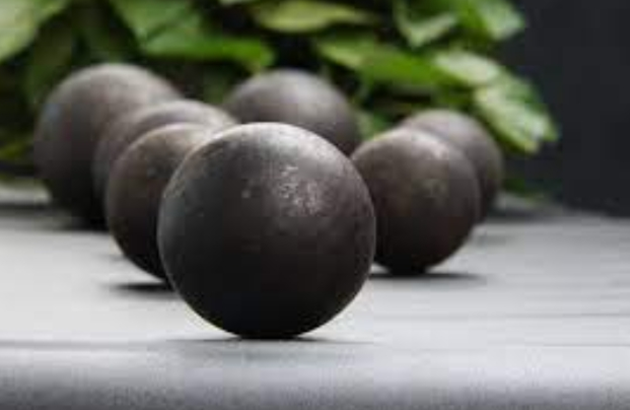
Chromium alloy grinding balls are typically produced using cast iron infused with chromium, carbon, and various alloying elements. They are engineered to maintain a high degree of surface hardness, core toughness, and microstructural uniformity.
Depending on the chromium content, they are categorized as:
Low Chromium (<5% Cr): Moderate hardness and lower wear resistance
Medium Chromium (5–10% Cr): Balanced performance for general use
High Chromium (>10–28% Cr): Superior wear resistance for highly abrasive environments
The focus here is on high chromium alloy grinding balls, which offer exceptional durability, particularly in dry grinding or high-impact applications.
Chromium is a powerful alloying element that enhances:
Hardness: Chromium carbide phases form during casting and heat treatment, increasing surface hardness.
Corrosion Resistance: Chromium promotes passive film formation, reducing chemical degradation in wet mills.
Toughness and Impact Strength: Balanced chromium content ensures hardness without brittleness.
The effectiveness of chromium alloy grinding balls lies in their optimized microstructure, typically composed of:
Martensite: Provides high hardness and strength
Austenite (controlled): Enhances toughness
Carbides (M?C? type): Hard phases that resist abrasion and cutting
By controlling cooling rates, alloy chemistry, and heat treatment, manufacturers produce balls that maintain wear resistance across their full lifespan—not just on the surface.
When compared to forged steel balls or low-chromium cast media, chromium alloy grinding balls consistently outperform in wear-critical environments:
Chromium alloy balls exhibit 20–50% longer service life in abrasive mills, reducing consumption and cost.
The high hardness prevents flattening or shape loss during milling, ensuring consistent particle grinding.
Chromium-rich carbides and uniform matrix prevent cracking and flaking under impact stress.
Slower wear rate means balls retain their original geometry longer, promoting stable mill performance.
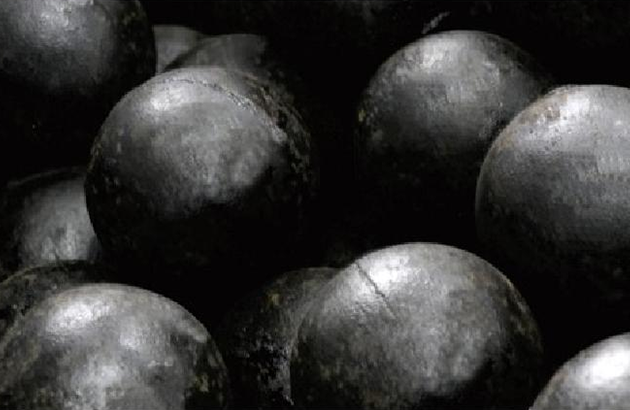
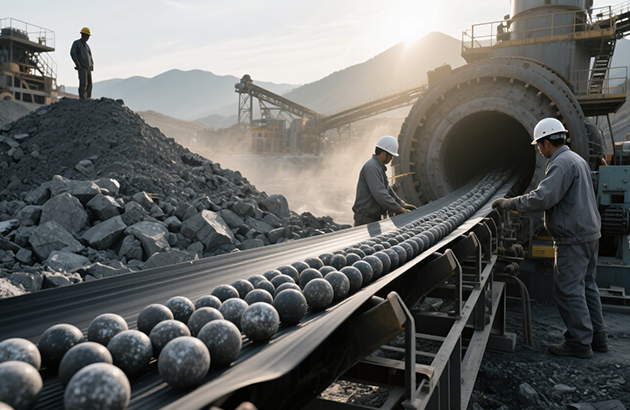
In gold, copper, and iron ore processing, ore hardness and grinding circuit pressure are extreme. Chromium alloy grinding balls provide:
Maximum mineral liberation
Consistent grinding performance
Reduced energy consumption due to efficient size reduction
They are especially effective in secondary grinding or regrinding stages where fine particle sizes increase frictional wear.
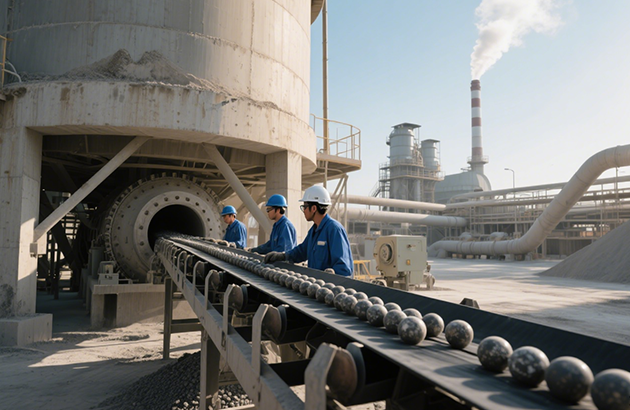
In raw and finish milling, especially with clinker, abrasive wear is a major challenge. Chromium balls:
Offer long service life in dry mill conditions
Maintain product fineness and mill output
Reduce mill liner and diaphragm wear
Their resistance to both impact and friction makes them well-suited for vertical and ball mills in cement production.
Grinding coal into pulverized fuel requires durability and thermal stability. Chromium alloy balls reduce mill shutdowns caused by:
Ball fragmentation
Imbalanced wear patterns
Output inconsistency
Their resistance to surface degradation improves combustion efficiency and plant reliability.
Grinding aggressive compounds or slags demands corrosion and abrasion resistance. Chromium alloy media:
Maintain hardness in chemically active slurries
Avoid contamination of sensitive products
Provide stable performance over long campaigns
Though chromium alloy grinding balls may have a higher initial purchase price, they offer compelling total cost of ownership benefits:
Reduced media consumption through lower wear rate
Less mill downtime due to fewer replacements
Lower labor and safety risks during maintenance
Improved mill throughput and energy savings due to sustained grinding efficiency
These long-term savings justify the investment and make high-chromium media a preferred choice in many grinding operations.
Not all chromium alloy balls are equal. Performance depends on:
Higher chromium percentages generally increase wear resistance but must be balanced with other properties like toughness.
Optimal carbon levels ensure proper formation of hard carbides without making the structure brittle.
Quenching and tempering processes fine-tune the microstructure for maximum performance.
Uniformity in grain structure and absence of casting defects (like porosity or inclusions) are essential for reliable wear performance.
Recent innovations include:
Micro-alloying with rare earth elements to improve carbide distribution
Isothermal quenching for better hardness control
Low-carbon high-chromium formulations that balance wear and toughness
Surface hardening techniques that extend lifespan without compromising core toughness
These advancements are enabling the next generation of grinding balls to perform better in even more demanding environments.
Using chromium alloy grinding balls also aligns with modern sustainability practices:
Less frequent replacements = lower steel consumption
Reduced energy usage due to more efficient grinding
Lower material waste due to longer media life
Fewer emissions from manufacturing, transport, and disposal
Additionally, many producers are exploring recyclable alloys and closed-loop casting systems to minimize their environmental footprint.
In environments where impact, friction, and corrosion work together to destroy standard grinding media, chromium alloy grinding balls shine as the ideal solution. With unmatched abrasive resistance, long-term durability, and consistent performance, they offer not only technical superiority but also significant economic and operational advantages.
Why do they lead? Because their metallurgy, hardness, microstructure, and field-proven performance come together to deliver:
Longer wear life
Reduced operational costs
Higher grinding efficiency
Better mill uptime and output quality
For industrial operations that demand reliability, durability, and cost control, high-chromium alloy grinding balls remain the top-tier choice in abrasive environments.
 Español
 Portugues
 Pусский
 Français
 中文
中文



 Phone
Phone
Comment
(0)